Pitra Dosh Puja Book a Verified Vedic Pandit to Seek Ancestral Blessings and Peace
In many families, a certain kind of struggle repeats itself across generations – delayed marriages, childlessness, unexplained illness, or a pattern of setbacks that no practical solution seems to fix. Pitra Dosh Puja is the Vedic ritual performed to honour one’s ancestors, resolve unfulfilled wishes or unrest in the ancestral lineage, and seek their blessings for the family’s peace and progress. At Vandanam, we connect you with verified, Vedic-trained pandits who perform the Pitra Dosh Puja with complete traditional authenticity – the correct mantras, the proper tarpan and havan, and the reverence this ritual calls for – at your home anywhere across Delhi NCR.
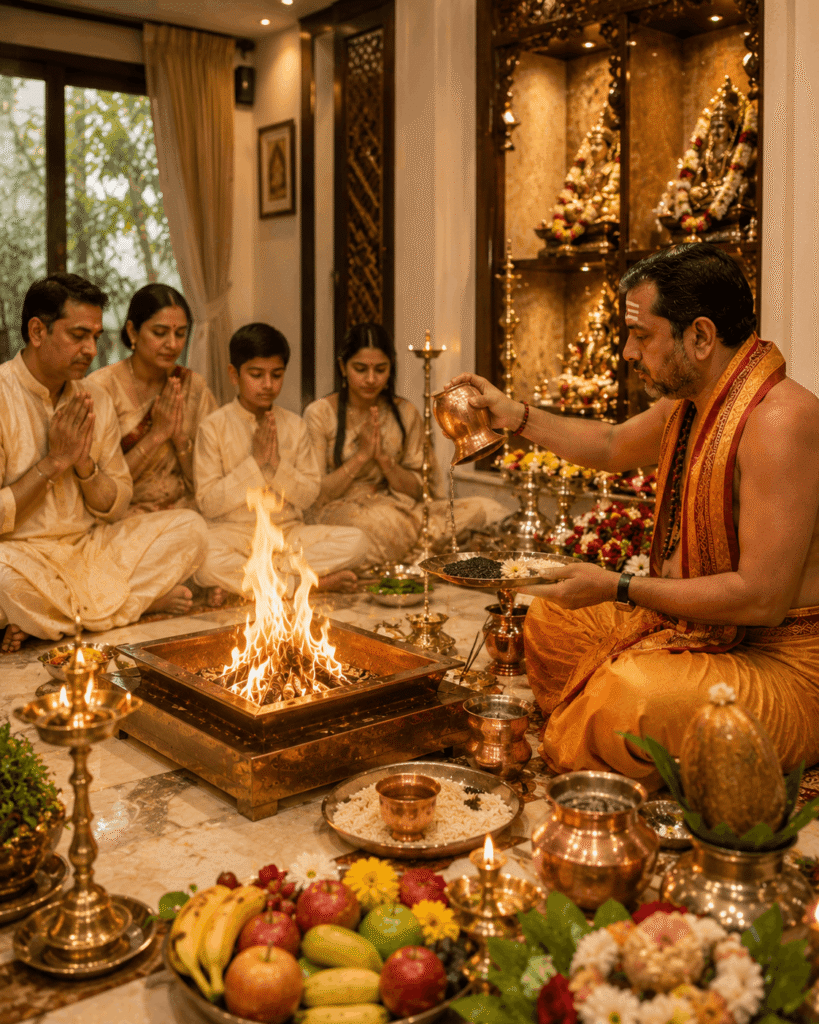
Book Pitra Dosh Puja with Verified Vedic Pandits
Verified Vedic Pandits
Background and ritual training checked before listing
Delhi NCR Availability
Delhi NCR
Transparent Process
Every ritual step explained before the ceremony begins
Dedicated Support
A real coordinator guides your booking, not a chatbot
Why Families Trust Vandanam for Their Pitra Dosh Puja
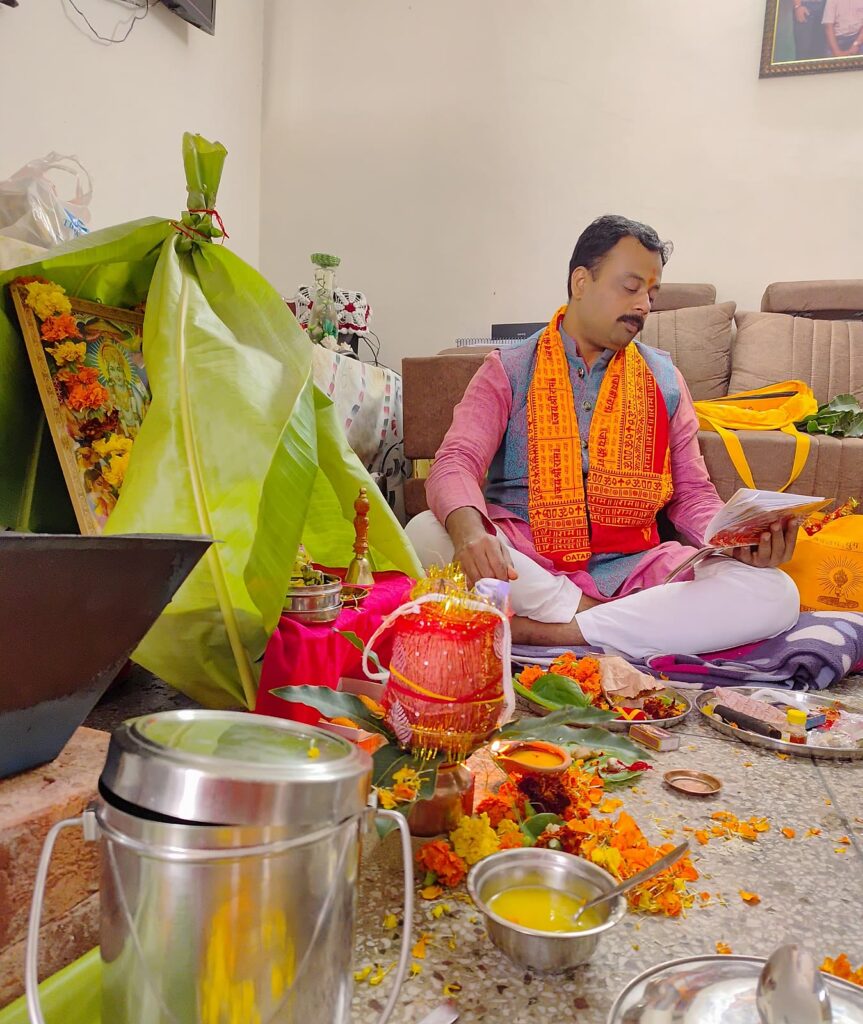
A Pitra Dosh Puja is performed when a family’s birth chart, or a pattern of recurring difficulty, points to unrest in the ancestral lineage – perhaps an ancestor whose last rites weren’t completed properly, an unfulfilled wish, or an unresolved family matter passed down unknowingly. It is one of the more emotionally significant pujas a family can book, which is why the pandit conducting it needs to bring precision and quiet respect in equal measure.
At Vandanam, we built the platform because that trust shouldn’t be a gamble.
Every pandit we list is verified before they ever accept a booking. We confirm their Vedic education, their specific experience conducting Pitra Dosh and Shraddha-related ceremonies, and their command of the Sanskrit mantras, tarpan procedure, and havan involved – including Pind Daan where required and the specific rites for Pitru Paksha.
You also get a dedicated Vandanam coordinator who understands how sensitive this ritual is for a family. They’re available in the days leading up to your puja to answer questions with care, confirm the correct tithi, align on samagri, and make sure every family member’s role in the ceremony is clear.
We are not an open marketplace. Every pandit on our platform is individually reviewed – which matters most when a family is trusting someone to perform a ritual on behalf of those who came before them.
Book Your Pitra Dosh Puja Pandit
Ready to book? Connect with our team through your preferred channel. We'll confirm your date, city, and specific family requirements, and assign a verified Pitra Dosh Puja pandit - usually within a few hours.
WhatsApp Support
Chat directly with our team for instant guidance and booking confirmation.
Speak to a Pitra Dosh Coordinator
Talk to a dedicated Vandanam expert who understands ancestral rituals and family concerns.
Simple Booking Form
Share your city, puja date, and what your family is hoping to address.
Fast Response
Our team responds within a few hours - or faster during Pitru Paksha when demand is high.
Serving Delhi NCR
Currently serving Delhi NCR.
Not sure whether pitra dosh puja is right for you?
What Is Pitra Dosh Puja?
Pitra Dosh is a condition described in Vedic astrology where the position of certain planets in a birth chart – often the Sun, Moon, or Rahu-Ketu axis – is believed to indicate unrest among one’s ancestors (pitras). This unrest is said to arise when an ancestor passed away with an unfulfilled desire, without proper last rites, or under difficult circumstances, and it is believed to affect descendants through delayed marriage, childlessness, poor health, or a persistent lack of progress despite genuine effort.
Pitra Dosh Puja, also known as Pitra Shanti Puja, is the ritual performed to honour these ancestors, offer them peace through tarpan (water offerings), pind daan (rice-ball offerings) where required, and specific mantras, and seek their blessings for the family’s wellbeing. It is distinct from a general Shraddha ceremony in that it is specifically aimed at correcting an identified astrological dosha, rather than simply observing an annual ancestral rite.
Key Rituals Typically Performed
- Ganesh Puja – invoking Lord Ganesha’s blessings before the ancestral ritual begins
- Tarpan – ritual water offerings made to ancestors, chanted with their names and gotra where known
- Pind Daan (where required) – rice-ball offerings performed for specific ancestors, particularly during Pitru Paksha
- Pitra Dosh Nivaran Homa – the fire ritual performed to specifically address the astrological dosha identified in the birth chart
- Narayan Bali (in specific cases) – a more elaborate rite sometimes recommended for severe or long-unaddressed pitra dosh
- Brahmin Bhoj – feeding of Brahmins or those in need, traditionally considered an essential closing part of the ritual
The exact combination depends on the specific dosha identified, the family’s gotra and lineage details, and whether the ritual is being performed during Pitru Paksha or independently – which is why Pitra Dosh Puja calls for a pandit experienced specifically in ancestral rites, not just general puja knowledge.
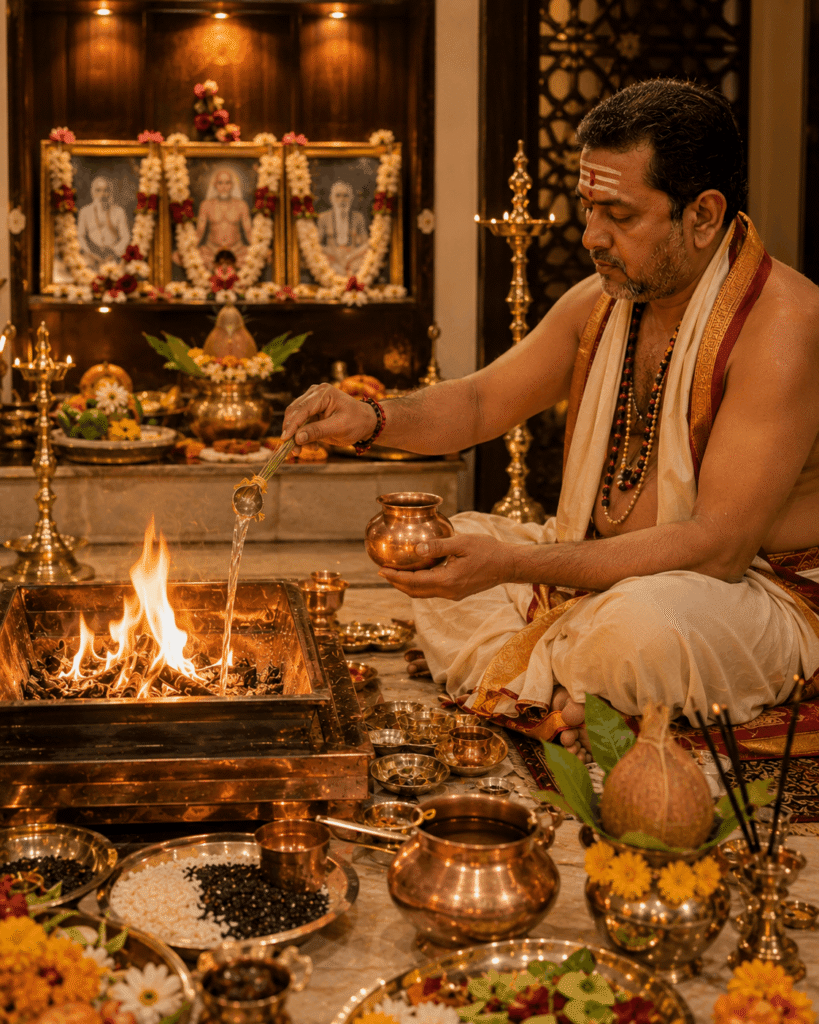
Did You Know?
Pitru Paksha, the sixteen-day lunar period dedicated to ancestors, is considered the single most significant window for this puja – many families specifically wait for this period each year, even if their astrologer identified the dosha months earlier.
Why Pitra Dosh Puja Matters More Than a One-Time Fix
It’s easy to attribute a run of family setbacks to circumstance alone, but many families find that a properly performed Pitra Dosh Puja – conducted with the right tarpan, mantras, and genuine reverence – marks a meaningful turning point that practical efforts alone hadn’t achieved. Here is why families across India choose to get this right with Vandanam.
What Families Seek Through Pitra Dosh Puja
Peace for the Ancestral Lineage
The correct tarpan and mantras, performed by an experienced pandit, are believed to offer genuine peace to ancestors whose wishes went unfulfilled
Relief From Recurring Family Patterns
Families often book this puja after noticing that a specific struggle – delayed marriage, childlessness, ill health – has repeated across more than one generation
Astrologer-Identified Dosha Correction
Many bookings follow a birth chart reading where an astrologer has specifically identified pitra dosh as a contributing factor
Fulfilling an Unaddressed Family Obligation
Some families book this puja after learning that an ancestor’s last rites were incomplete or that certain rituals were missed
Timely Observance During Pitru Paksha
Many families specifically want this ritual completed within the Pitru Paksha window, which requires advance planning given high demand
Peace of Mind Across Generations
Pitra dosh concerns often carry a quiet emotional weight for the whole family. Vandanam takes the uncertainty out of finding a pandit qualified to conduct this respectfully
Who Typically Books Pitra Dosh Puja Through Vandanam
Families who have consulted an astrologer and been told their birth chart shows signs of pitra dosh
Households facing recurring delays in marriage or childbirth across more than one family member
Families experiencing unexplained health issues or setbacks that persist despite medical and practical intervention
Families wanting to perform the ritual specifically during Pitru Paksha as an annual or one-time observance
Families who recently learned that an ancestor’s last rites were incomplete or improperly performed
NRI families who want the ritual performed at their India-based family home or on their behalf without travelling personally
If you’re unsure whether your situation reflects pitra dosh or a different kind of dosha entirely, our team can help you think through the options based on what your family has been experiencing.
Best Time to Perform Pitra Dosh Puja (Muhurat)
The timing of a Pitra Dosh Puja carries particular significance in Hindu tradition, since it is directed at specific ancestors rather than a general ritual moment. It is typically calculated using the lunar calendar (panchang), the ancestor’s death tithi where known, and the Pitru Paksha period specifically set aside for this purpose.
| Occasion | Why It's Significant |
|---|---|
| Pitru Paksha | The most widely observed window for ancestor-related rituals, believed to be when ancestors are especially receptive to offerings |
| Amavasya (New Moon) | Considered the most favourable lunar day each month for pitra-related rituals, especially Mahalaya Amavasya |
| Death Anniversary (Tithi) | Many families choose the ancestor's death anniversary by the Hindu calendar as the most meaningful day for the puja |
| Akshaya Tritiya | One of the few self-auspicious days considered suitable for ancestor worship without separate muhurat calculation |
| Custom Muhurat | Calculated individually by your pandit based on your family's specific pitra dosh concern and birth details |
Our Verified Vedic Pandits for Pitra Dosh Puja
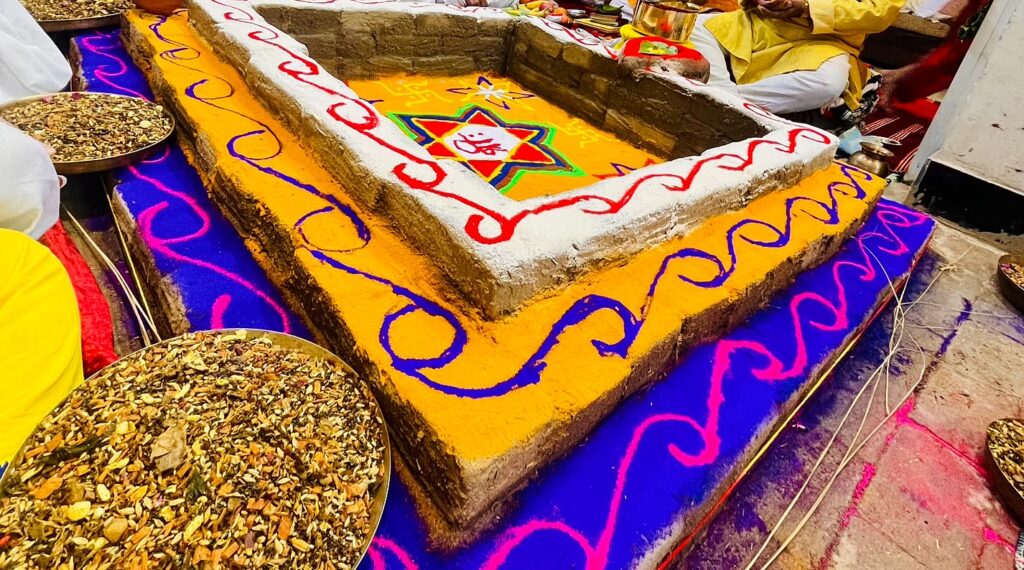
A Pitra Dosh Puja typically takes two to three hours, sometimes longer during Pitru Paksha when multiple ancestors are being honoured, and requires a pandit who understands both the precise tarpan procedure and the family’s gotra and lineage conventions.
Before a pandit is listed on Vandanam, our team verifies their Vedic education background, confirms their specific experience conducting Pitra Dosh and Shraddha ceremonies, and checks their fluency in the complete ritual sequence: tarpan, pind daan where applicable, the Pitra Dosh Nivaran Homa, and Brahmin Bhoj, along with the Sanskrit mantras and correct pronunciation of ancestral names and gotra.
We also verify that the pandit can explain each part of the ritual with sensitivity, since families are often emotionally invested in getting this particular ceremony right, and can clarify which specific dosha is being addressed and why.
Feedback is collected after every puja, and pandits who consistently conduct this ritual with both precision and genuine respect are the ones Vandanam continues to recommend.
FREQUENTLY ASKED QUESTIONS
Frequently Asked Questions About Pitra Dosh Puja
What is the difference between Pitra Dosh Puja and a regular Shraddha ceremony?
A regular Shraddha is an annual ancestral rite performed on the death anniversary as an ongoing family tradition, while Pitra Dosh Puja is specifically performed to correct an astrological dosha identified in a birth chart, often on an astrologer’s recommendation. Many families end up doing both, but Pitra Dosh Puja is the more targeted, remedy-focused ritual.
How long does a Pitra Dosh Puja take?
A complete Pitra Dosh Puja typically takes between two and three hours, and can run longer during Pitru Paksha if multiple ancestors are being honoured in the same ceremony. Your pandit will confirm the exact timeline during the consultation.
Which rituals are included in a standard Pitra Dosh Puja?
A standard Pitra Dosh Puja typically includes Ganesh Puja, tarpan, pind daan where applicable, the Pitra Dosh Nivaran Homa, and Brahmin Bhoj. The pandit will adapt the specific rites based on your family’s gotra, the ancestor being honoured, and whether the ritual is performed during Pitru Paksha.
Does the pandit bring samagri for the puja?
Yes. All essential samagri required for your Pitra Dosh Puja – including tarpan items, pind daan materials where needed, and homa offerings – is brought by the pandit. You will receive a confirmation list beforehand so there are no surprises.
How far in advance should I book a pandit for Pitru Paksha?
Since Pitru Paksha sees very high demand for verified pandits, we recommend booking at least two to three weeks in advance of the period each year. For pujas performed outside Pitru Paksha, a few days’ notice is usually sufficient.
How do I book a verified pandit for Pitra Dosh Puja through Vandanam?
Share your city, preferred date, and what your family is hoping to address via our booking form, WhatsApp, or phone. Our team will confirm the details with care, answer your questions, and assign a verified pandit experienced in ancestral rituals – usually within a few hours of your inquiry.
Ready to Seek Peace and Blessings for Your Family Lineage?
Whether an astrologer has identified pitra dosh in your chart or your family simply wants to honour your ancestors properly this Pitru Paksha, this ritual deserves a pandit who understands both the mantras and the meaning behind them. Vandanam connects you with verified Vedic pandits who bring exactly that to your ceremony, wherever you are.